
Open Today Sales: 8 AM-8 PM


Drivers searching for Chevy lease deals in Louisville, KY, quickly learn that national offers rarely match what’s available at the dealership and that the fine print matters more than the headline payment. At Glenn Chevrolet, we do leases differently: we lay out the real numbers, explain exactly how they’re structured, and work toward a payment that makes sense for your budget. If you’re comparing offers from Louisville-area dealers, this guide will show you what to look for and how our approach stacks up.
Choosing where to lease matters as much as choosing what to lease. Our staff in Eminence is credentialed to access the full range of current Chevrolet lease specials and GM Financial programs while still delivering the kind of personalized service where someone genuinely goes to bat to make a deal work. Reviews from customers who drove from Shelbyville and from the Harlan area both describe a process that was faster, more transparent, and more creative with the deal than what they encountered closer to home.
Leasing a Chevrolet is straightforward once you understand the underlying structure, but that structure is genuinely different from financing. The section below gives you the working knowledge to evaluate any lease offer confidently.
| Definition | Agreed-upon selling price of the vehicle for lease purposes |
| Negotiable | Yes — the same as a purchase price |
The cap cost is the number the rest of your lease is built from. It’s not a fixed manufacturer figure — it’s negotiated between you and the dealer, exactly like the price on a cash or financed deal.
Why it matters: negotiating the cap cost down directly lowers your monthly payment. Don’t accept it as a fixed starting point.
| Definition | GM Financial’s projection of the vehicle’s worth at lease end |
| Expressed As | Percentage of MSRP |
| Effect on Payment | Higher residual = lower payment |
A higher residual value means you’re financing a smaller portion of the vehicle’s value over the lease term, which lowers your payment without any change to the vehicle’s actual price.
Why it matters: residual value is set by GM Financial, not negotiated at the dealership — but it’s a major reason otherwise-similar vehicles can lease very differently.
| Definition | The lease’s financing rate |
| Convert to APR | Multiply by 2,400 |
| Example | 0.00150 money factor ≈ 3.6% APR |
The money factor determines the finance charge portion of your payment, on top of the depreciation covered by the cap cost and residual value.
Why it matters: ask for the money factor directly and run the ×2,400 math yourself. A competitive-looking payment can still hide a high money factor.
All three figures — cap cost, residual value, and money factor — appear in your lease agreement, and all three are worth confirming before you sign.
Two lease offers can show identical monthly payments while being structured very differently beneath the surface. A dealer who inflates the cap cost while applying a low money factor, or one who bundles dealer add-ons into the capitalized cost, can produce a payment that looks competitive while delivering significantly less value over the term. The payment alone does not tell you whether a lease is fair. Reviewing cap cost, residual, and money factor together is the only reliable way to compare offers accurately, and it takes less than five minutes when someone walks you through it.
The leasable Chevrolet lineup at Glenn Chevrolet spans the Trax and Chevrolet Equinox through the Traverse, Tahoe, and Silverado 1500. Not every model leases with equal efficiency, and the differences trace directly to monthly residual values and current GM manufacturer support.
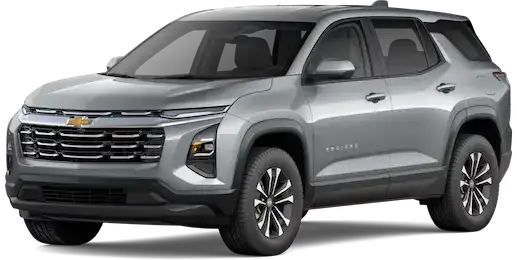
Compact SUVs like the Equinox and the Chevy Trax carry strong residual values relative to their MSRP, which is the primary driver of a low monthly payment. When GM Financial assigns a high residual to a vehicle, the lessee pays for a smaller portion of its total value over the term. Both models also appear frequently in GM’s national lease promotion cycles, meaning manufacturer incentive support often compounds already-favorable residuals, producing some of the most accessible monthly payments in the Chevrolet lineup.
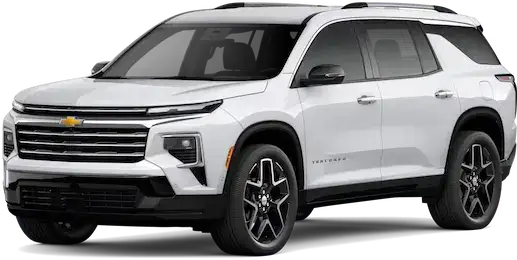
Larger vehicles like the Chevrolet Traverse carry higher MSRPs, which means monthly payments are typically higher in absolute dollar terms even when the residual percentage is comparable. The Silverado 1500 leases well for drivers who want truck capability without the long-term depreciation exposure that comes with ownership, particularly those who prefer cycling into a new model every three years. The key variable to track on truck leases is the mileage allowance, since heavy-use driving patterns can generate meaningful overage fees at return.
Leasing makes the most practical sense for drivers who want a new Chevrolet every two to three years, keep their mileage within predictable annual limits, and prefer a lower monthly payment over building equity. Buying, whether new or through our Chevrolet Certified Pre-Owned inventory, makes more sense for drivers who accumulate high annual mileage, plan to modify the vehicle, or intend to hold it beyond five years. Neither path is universally better; the right answer follows from your specific situation, and we’re direct about that when customers ask.
A new Equinox lease at a competitive money factor and residual will often produce a lower monthly payment than financing a comparable CPO Equinox over 60 months, particularly when manufacturer lease support is active. The trade-off is that the lease builds no equity and comes with mileage conditions, while financing a CPO model means a higher payment in many cases but full ownership at payoff. Our finance team can place both scenarios side by side so the comparison is concrete, and you can get started by submitting our online credit application before your visit.
Getting pre-approved before making the drive to Eminence saves time and gives you a clearer picture of which models fall within your target payment range before you arrive.
Our current lease specials are updated monthly and reflect active GM Financial residuals and any manufacturer incentive support in the current program period. Checking this page before your visit ensures you’re evaluating live numbers rather than an offer that may have expired at the end of the prior month. The specials page also identifies which models are carrying the strongest programs right now, which is the fastest way to narrow your options.
Submitting your information through our finance application before arriving means our team can have a credit decision ready before you walk through the door, which shortens the dealership portion of the process considerably. It also lets us identify which GM Financial lease programs you qualify for, since some incentivized money factors are available only to customers who meet specific credit tier thresholds. Drivers coming from the Louisville area in particular tell us they appreciate knowing their approval status before making the drive.
The end of a lease is an area where first-time lessees often feel uncertain, and we think that uncertainty is entirely preventable with clear information upfront. When your term concludes, you have three straightforward options: return the vehicle and walk away with no further obligation beyond any end-of-term inspection charges, purchase the vehicle at the residual value stated in your original agreement, or roll into a new lease on a current Chevrolet model. Most of our returning customers find the transition into a new lease to be the smoothest path, since current GM programs frequently make the switch cost-neutral or better. We review your options before your term ends, not after you’ve already returned the vehicle.
A competitive money factor on a Chevrolet lease generally falls below 0.00150, which converts to approximately 3.6% APR. GM Financial updates money factors monthly by model and trim, so the benchmark shifts regularly. The most reliable way to confirm whether the rate you’re being offered is favorable is to ask our team directly. We share the money factor on every lease we present without requiring you to ask twice. You can browse our full Chevrolet inventory alongside our specials page to identify which models are carrying the strongest programs this month.
The monthly cost of leasing a new Chevrolet is typically lower than that of financing the same vehicle to purchase, assuming comparable credit qualifications. Whether leasing is ultimately cheaper depends on your holding period: a driver who leases sequentially will always have a payment, while a buyer who holds the vehicle long-term eventually owns it outright. For Kentucky drivers who upgrade every three years or fewer, leasing generally delivers a lower total cost per year of use. For drivers who hold vehicles for five years or longer, financing typically wins on total cost.
Standard Chevrolet leases offer annual mileage allowances of 10,000, 12,000, or 15,000 miles, with 12,000 being the most common default. Higher allowances can sometimes be structured at signing for an adjusted monthly payment. A Louisville-area driver with a 20-mile daily round-trip commute accumulates roughly 5,200 commuting miles per year, meaning personal and weekend driving typically brings most customers into the 12,000 to 15,000-mile range annually. Choosing the right tier at signing is one of the most consequential decisions a lessee makes.
Going over your contracted mileage results in a per-mile overage charge assessed at lease return, at the rate specified in your original agreement, which typically falls between $0.20 and $0.25 per mile. This charge applies to every mile beyond the limit with no grace threshold in most standard agreements. If you recognize mid-lease that you’re tracking over your allowance, contact our finance team at Glenn Chevrolet to discuss whether purchasing additional miles during the term is an option, as the per-mile rate at that stage is generally still lower than the end-of-term overage rate.
Leasing is fully available on the Chevrolet Silverado 1500, and the Silverado is a strong lease option for drivers who want truck capability without the long-term depreciation exposure that comes with ownership. Lease terms on the Silverado vary by cab configuration and trim level. For customers whose primary use involves heavy hauling or high annual mileage, we recommend reviewing the full terms carefully, since commercial-use patterns can affect end-of-lease costs in ways that differ from typical passenger vehicle leases. Our team is straightforward about those trade-offs before you sign.
From a financial risk standpoint, minimizing your down payment on a lease is generally the smarter move. If your leased vehicle is totaled or stolen, your insurance pays the vehicle’s actual cash value — not what you still owe on the lease. Any cap cost reduction you paid at signing is gone regardless of that outcome, and GAP coverage only protects the difference between the insurance payout and your remaining lease balance, not your upfront cash. Keeping that money liquid preserves your flexibility and limits your exposure. A modest down payment to hit a specific monthly payment target can be reasonable situationally, but a large one rarely makes financial sense on a lease.
GM Financial defines normal wear as minor surface scratches, small door dings within a certain size threshold, and light interior wear consistent with regular use. What generates a charge at return is anything beyond that: dents, paint damage that breaks through the clear coat, cracked or missing trim, tires below minimum tread depth, or windshield chips that have spread. The specific size and condition standards are outlined in the Wear and Use guidelines in your lease documentation. We recommend reviewing those guidelines about 60 to 90 days before your return date and addressing anything that would cost less to repair privately than through GM Financial’s standardized pricing. You can also request a pre-return inspection to identify charges before they show up on your final bill.
Yes, you can purchase your leased Chevrolet at lease end for the residual value written into your original contract. Whether that is a good deal depends on how the residual compares to the vehicle’s actual market value at that point. If used car prices are elevated, your contractually locked-in residual may be below what the vehicle is worth on the open market — making the buyout a genuine financial win. If market values have softened, you may be paying above market, in which case returning the vehicle and starting fresh is the better move. About 60 to 90 days before your lease ends, check the current market value of your specific vehicle and mileage against your residual, and our finance team can help you run that comparison before you decide.
Your next Chevy lease doesn’t have to start with guesswork or fine print that only makes sense after the fact. At Glenn Chevrolet in Eminence, we put every number on the table up front and build a lease around the way you actually drive, not just what looks good in an ad. If you’re in the Louisville area and ready to see what a straightforward Chevy lease really looks like, start by checking our current specials, getting pre-approved online, or calling our team to talk through your options before you make the drive.